Cycling to Santiago in the Camino Holy Year 2027: The Porta Santa Holy Door Explained
Written by Sérgio Marques, Founder & Route Designer, Top Bike Tours Portugal
September 8, 2026
1763 words
9 minutes
Once every five, six or eleven years, a door that stays sealed for the rest of time swings open in the heart of Santiago de Compostela. In 2027, it opens again, and for cyclists riding the Camino Português into Galicia, arriving through it will be the single most symbolic moment of the whole journey.
This is your guide to the Porta Santa, why 2027 is a genuine once-in-a-decade event on the Camino, and what it means for anyone planning to cycle the Portuguese Camino from Porto to Santiago during the Holy Year, whether you’re comparing bike tours, cycling holidays, or a fully guided cycling vacation to get there.
What Is the Porta Santa (Holy Door)?
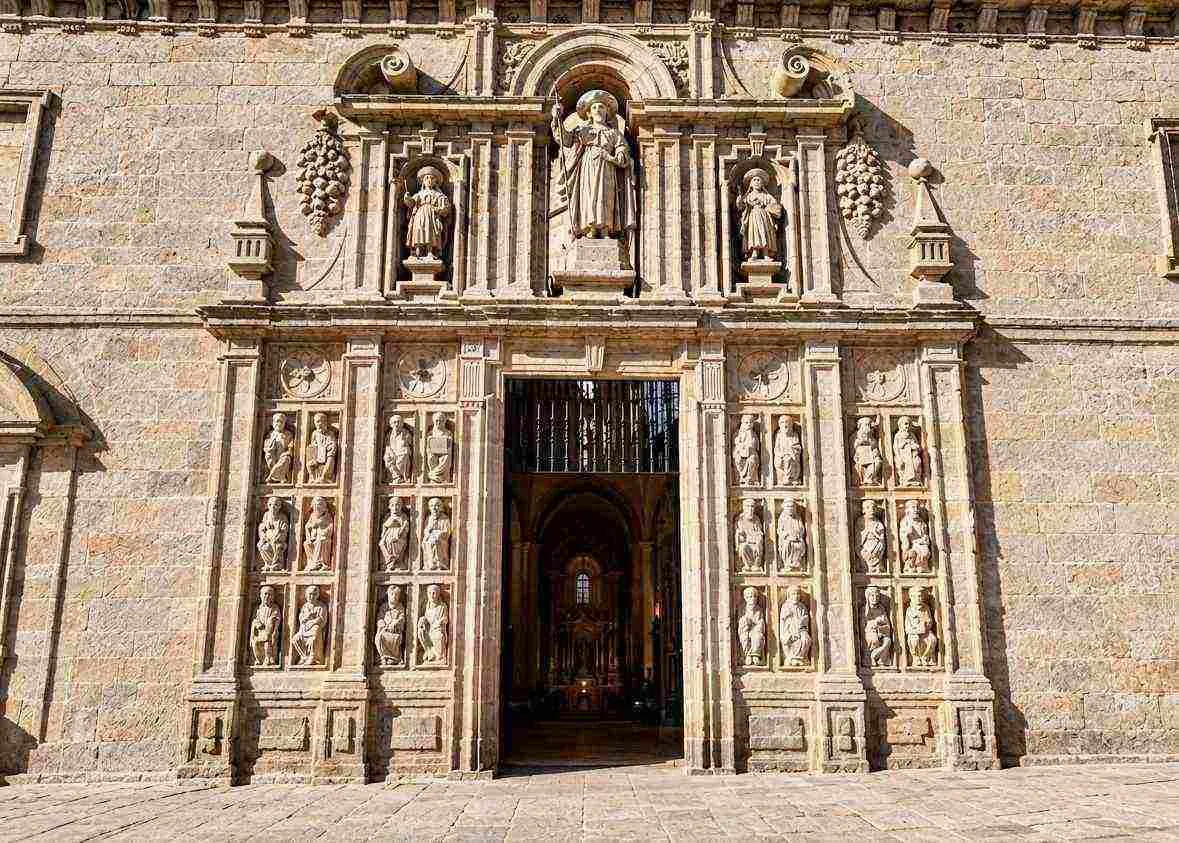
The Porta Santa, or Holy Door, is a side entrance to Santiago Cathedral on the beautiful Praza da Quintana, one of the city’s most atmospheric squares, and usually the first place cyclists reach. Unlike the cathedral’s other entrances, the Holy Door leads pilgrims straight past the main altar and down toward the crypt where the remains of Saint James the Apostle are kept.
The doorway itself is a piece of history in stone. It’s flanked by 24 carved figures, often called the door’s “doorkeepers”, created by the medieval sculptor Mestre Mateo in the 12th century. These figures originally stood in the cathedral’s old stone choir before being moved to their current position centuries later. Above them, a carving of Saint James the Pilgrim looks down on everyone who passes beneath.
For most of history, the door was also known as the Puerta del Perdón, the Door of Forgiveness. Crucially, it is sealed shut with stone every year that isn’t a Holy Year. You simply cannot walk or cycle through it in an ordinary season. That’s what makes 2027 rare.
Why 2027 Is a Holy Year (Ano Xacobeo)
A Camino Holy Year, known locally as the Ano Xacobeo, happens whenever July 25th, the feast day of Saint James, falls on a Sunday. Because of how the calendar and leap years interact, this follows an irregular pattern of 6, 5, 6 and 11 years apart, adding up to roughly 14 Holy Years per century.
The last one was 2021, extended into 2022 by Pope Francis because of the pandemic, the only time in the Camino’s history that a Jacobean Year has spanned two calendar years. After 2027, the next Holy Years won’t arrive until 2032, 2038 and 2049. In other words, if this window closes without you in Santiago, the next real chance is five years away.
When Does the Holy Door Open in 2027?
The opening follows a centuries-old ritual. On December 31, 2026, the Archbishop of Santiago knocks down the sealed wall behind the door with a ceremonial hammer, becoming the first person to cross the threshold, before blessing it with holy water and olive branches. From that moment, the Porta Santa stays open for the entire calendar year of 2027, January 1 through December 31, before being sealed shut again until the next Xacobeo.
That full-year window is good news for cyclists: you do not need to time your arrival to a specific date or festival to ride through the Holy Door. Any day in 2027 works.
The Plenary Indulgence - Why It Matters Even If You’re Not Religious
Since the 12th century, pilgrims who visit the cathedral during a Holy Year have been able to receive a plenary indulgence, in Catholic tradition, a full forgiveness of sins. To qualify, a pilgrim generally needs to visit the cathedral, pray, attend Mass, and go to Confession within about 15 days of their visit.
You don’t have to be religious to feel the pull of the Holy Door, though. Even secular cyclists describe something different about arriving in Santiago in a Xacobeo year: a fuller cathedral square, a stronger current of shared purpose among fellow travellers, and a city visibly leaning into a once-in-a-generation occasion. Concerts, exhibitions and cultural events run throughout 2027 as part of the official Xacobeo programme, on top of the usual celebrations around Saint James’ Day on July 25th.
What a Holy Year Means for Cyclists Riding the Camino Português
A Holy Year changes the practical side of planning your ride, not just the atmosphere in Santiago.
-
Higher numbers on the trail. 2025 already set a record for a non-Holy Year, with well over half a million Compostela certificates issued by the Pilgrim Office. Holy Years push that baseline significantly higher, and 2027 is expected to be the busiest year the Camino has ever seen.
-
Accommodation books out earlier. The final stretches into Santiago, where cycling and walking pilgrims share the same towns and guesthouses, fill up months ahead of time in a normal year. In 2027, expect that window to close even earlier, especially for spring and summer departures.
-
A livelier, more social ride. More riders and walkers on the trail also means more energy in the albergues, cafés and squares along the route, for many cyclists, that’s part of the appeal of choosing a Holy Year specifically.
-
The Portuguese Camino stays a quieter alternative. The Camino Francés from Sarria traditionally absorbs the biggest surge in Holy Year numbers. The Camino Português, particularly by bike, where riders naturally spread out more than walkers, remains one of the more comfortable ways to experience 2027 without the heaviest crowds.
Best Time to Cycle to Santiago During the 2027 Holy Year
The Porta Santa is open all year, so timing your ride comes down to weather and crowd levels rather than the ritual itself.
-
Spring (April–June) and autumn (September–October) offer the best mix of pleasant riding temperatures, good daylight, and manageable numbers, our usual recommendation for the Camino Português, and even more relevant in a Holy Year.
-
Summer (July–August) will be the busiest period by far, compounded by Holy Year demand around the July 25th celebrations. Ride it if you don’t mind crowded plazas and book everything well in advance.
-
Winter (January–March, November–December) gives you the rare chance to cross the Holy Door with the smallest crowds of the entire Jacobean Year, cooler riding, but a genuinely different, quieter kind of arrival in Santiago.
Riding In Through the Holy Door: What to Expect on Arrival
For cyclists on the Camino Português, the final approach to Santiago runs down through Monte do Gozo and into the old town, finishing at the cathedral square. In a normal year, most riders enter through the cathedral’s main west façade. In 2027, the option to enter through the Porta Santa on Praza da Quintana adds a second, deeply symbolic route into the building, well worth building into your last day, whether or not you plan to seek the plenary indulgence.
If you’re planning your route and logistics from Porto, our complete guide to cycling the Portuguese Camino from Porto to Santiago covers terrain, daily distances, bikes, accommodation and the coastal versus inland route decision in full, it’s the right starting point before you lock in Holy Year dates.
Cycling to Santiago for the 2027 Holy Year with Top Bike Tours Portugal
We’ve been designing and running Porto-to-Santiago bike tours for over a decade, and a Holy Year is exactly the kind of moment our guided and self-guided cycling holidays are built for: hand-picked accommodation booked well ahead of the 2027 rush, daily luggage transfers, GPS-supported routes, and local knowledge of exactly how the final days into Santiago change during a Xacobeo.
Whether you’re looking for fully guided bike tours with a support vehicle and local guide, a self-guided cycling holiday at your own pace, or an e-bike tour that opens the Camino up to riders of any fitness level, our Camino de Santiago packages are built specifically around this route. Our Porto to Santiago de Compostela Bike Tour is our most popular option for riders heading toward the Holy Door, and given how far ahead Holy Year accommodation is already being reserved, early booking matters more for 2027 than in any recent year.
Check our guided bike tours calendar to see confirmed 2027 departure dates and secure your place for the Holy Year. Additional departures and tours will be announced soon. With demand expected to be significantly higher than usual during the Holy Year, we recommend booking early, as tour places and hotel availability are likely to sell out quickly.
FAQs
What is the Porta Santa in Santiago de Compostela?
- The Porta Santa, or Holy Door, is a special entrance to Santiago Cathedral on the Praza da Quintana. It is sealed shut every ordinary year and only opens during a Camino Holy Year, leading pilgrims past the main altar toward the crypt of Saint James.
When does the Holy Door open for 2027?
- The Archbishop of Santiago opens it in a ceremony on December 31, 2026. It then remains open for the whole of 2027, from January 1 to December 31, before being sealed again until the next Holy Year.
Why is 2027 a Camino Holy Year?
- A Holy Year, or Ano Xacobeo, occurs whenever July 25th, the Feast of Saint James, falls on a Sunday. It happens on an irregular cycle of 6, 5, 6 and 11 years. After 2027, the next Holy Years are 2032, 2038 and 2049.
Do I need to arrive on a specific date to cycle through the Holy Door?
- No. The door is open for the entire calendar year of 2027, so any arrival date works, you don’t need to time your ride around July 25th or any other single date.
Is the Camino Português busier during a Holy Year?
- Yes, though generally less so than the Camino Francés. The Portuguese Camino remains one of the more comfortable ways to experience the 2027 Holy Year, especially by bike, but accommodation in the final stages toward Santiago should still be booked well in advance.
Do I have to be religious to ride through the Holy Door?
- Not at all. The plenary indulgence is available to Catholic pilgrims who meet specific requirements, but the Holy Door and the Camino itself welcome riders of every background, many cyclists are drawn simply by the history and the atmosphere of a Holy Year.
What’s the best bike tour for the Camino de Santiago in 2027?
- The Porto to Santiago Coastal Way is the most popular Camino de Santiago bike tour for riders wanting a Holy Year finish, thanks to its flatter terrain, coastal scenery and manageable 8-day pace. Both guided bike tours and self-guided cycling holidays are available, with e-bike upgrades for riders who want extra support over the longer days.