Northern Portugal Bike Tours: Porto, Douro Valley & Camino de Santiago
Written by Sérgio Marques, Founder & Route Designer, Top Bike Tours Portugal
June 30, 2026
1077 words
5 minutes
Northern Portugal is widely considered the most iconic cycling region in the country. Within a single holiday, riders can coast along Atlantic beaches from Porto, wind through the terraced vineyards of the Douro Valley, and follow the cobbled pilgrimage roads of the Camino de Santiago all the way to the cathedral in Santiago de Compostela.
This guide covers everything you need to plan a cycling holiday in Northern Portugal, from route options and difficulty levels to the best time to visit and how each sub-region feels on two wheels. For broader context across the whole country, see our article Portugal Cycling Tours by Region.
Why Northern Portugal stands out for cycling
Portugal is a small country, but its northern third packs in extraordinary variety. In a single week on a bike, you can experience all of the following without ever repeating a landscape:
- A UNESCO World Heritage city (Porto) as your starting point
- Atlantic coastal riding on quiet cycling paths and ocean-side roads
- The Douro Valley, one of Europe’s most scenic river corridors and a UNESCO World Heritage wine region
- The Minho region, a green, rural border area shaped by Celtic and Roman history
- The Portuguese Camino de Santiago, one of the world’s great cultural cycling routes
Compared to the Algarve or Alentejo, Northern Portugal also offers more moderate summer temperatures and a stronger infrastructure of local guesthouses, manor houses, and wine estates that make cycle touring feel genuinely special, not just logistically convenient.
Note for international travellers: Porto’s Francisco Sá Carneiro Airport (OPO) is a 15-minute transfer from the city centre and served by direct flights from the UK, Germany, France, Netherlands, Ireland, and most major European hubs. It’s the natural entry point for Northern Portugal cycling holidays.
Porto & the Atlantic coast
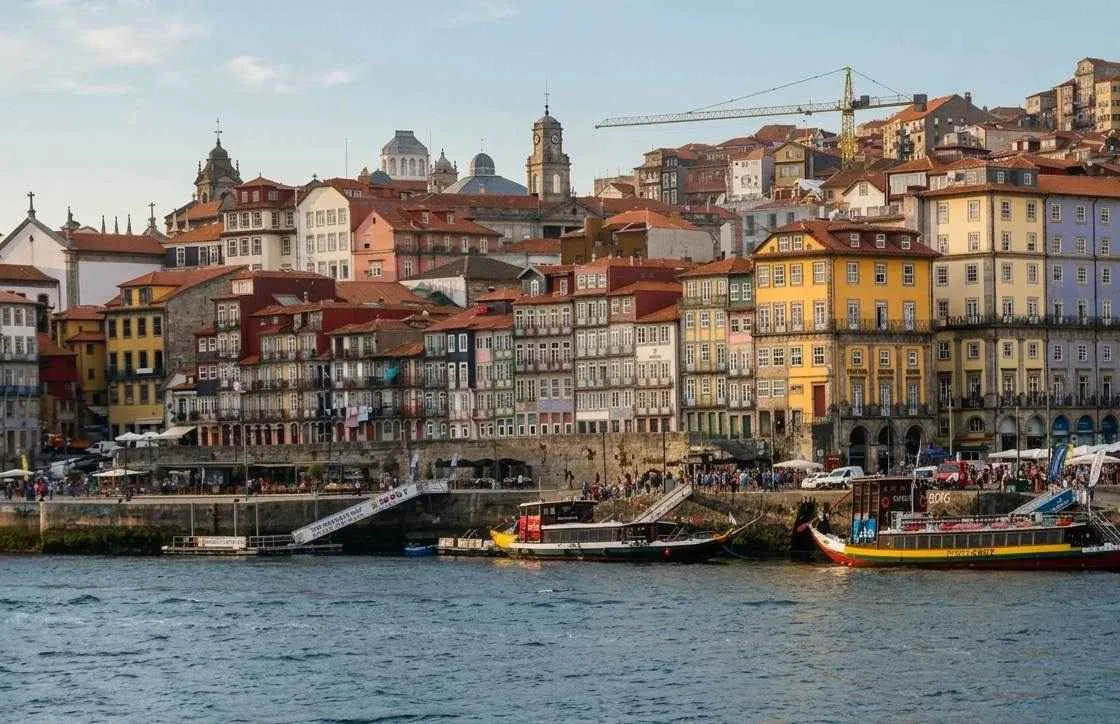
Most Northern Portugal cycling itineraries begin in Porto, a city compact enough to explore by bike yet rich enough to deserve an extra day or two before departure. The historic Ribeira waterfront, the Livraria Lello bookshop, the Port wine cellars of Vila Nova de Gaia, and the Foz do Douro beach neighbourhood are all within a short ride of each other.
What the coastal riding is like
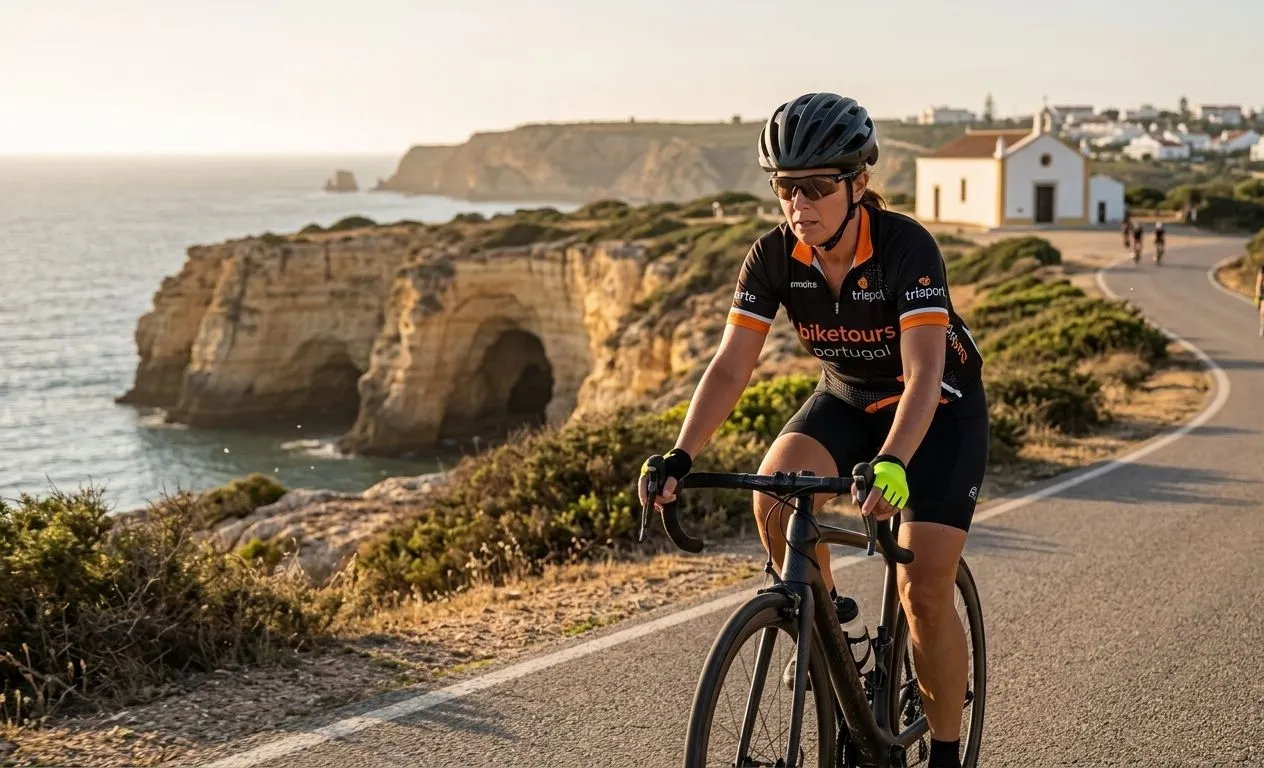
Heading north from Porto along the Atlantic coast takes cyclists through the Minho region, a mosaic of fishing villages, estuaries, vine-covered hillsides, and sandy beaches stretching to the Spanish border at the Minho river. The terrain is flat to gently rolling, making it the most accessible route in Northern Portugal for less experienced riders or anyone who wants to cover ground without grinding climbs.
- Terrain: Mostly flat with occasional gentle rises
- Typical daily distance: 40–55 km
- Rider level: 1–2 out of 5
- Highlights: Viana do Castelo, Caminha, the Cávado estuary, Atlantic seafood culture
This is also the route cyclists take when riding the Porto to Santiago de Compostela Coastal Way, which follows or closely parallels the Portuguese Camino through the coast rather than the interior.
Douro Valley bike tours
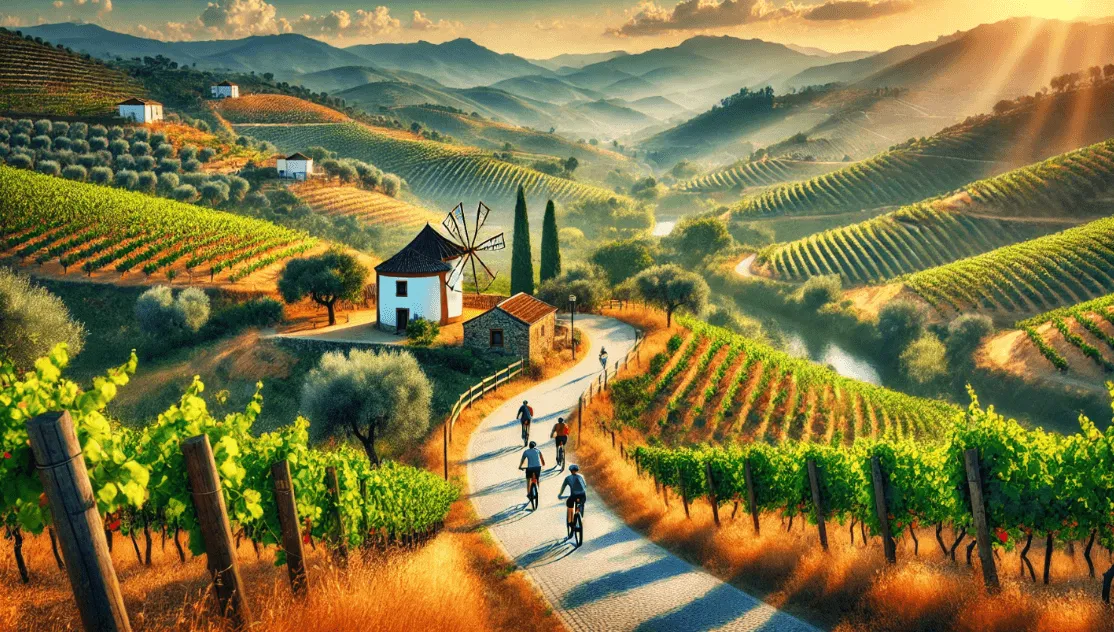
The Douro Valley is the most visually dramatic cycling landscape in Portugal, and arguably one of the finest in all of Europe. Declared a UNESCO World Heritage Site in 2001, the valley is defined by its socalcos: hand-built terraces of schist rock that climb steeply from the riverbank to support the oldest demarcated wine region in the world.
The Douro Valley is best visited in April–May for flowering almond trees and cooler climbing temperatures, or in September–October during the vindima (grape harvest), when the valley is most alive with colour and activity.
What makes the Douro unmistakable on a bike
Riding in the Douro is fundamentally different from coastal cycling. This is a region that rewards patience and presence. Climbs are real, the valley walls can be steep, but every effort is paid back with panoramic views across the river. Most days, you’ll stop at wine estates (quintas) for tastings of Douro wines and the aged Port wines that made this region famous internationally.
- Terrain: Rolling to hilly, with moderate climbs
- Typical daily distance: 40–70 km
- Rider level: 2–4 out of 5 (e-bike option available on all routes)
- Highlights: Pinhão, Régua, Quinta da Pacheca, Foz Côa rock art, Lamego
Douro cycling and gastronomy
No other cycling region in Portugal integrates food and wine as seamlessly as the Douro. Many tours include overnight stays at wine estates where dinner is served in the estate’s own restaurant, using local produce and wines from that quinta’s own cellar. If Portuguese gastronomy is part of why you’re travelling, the Douro is the single best place to experience it from the saddle.
Camino de Santiago by bike
The Portuguese Camino de Santiago is one of the most popular cycling routes in Europe, and for good reason. It combines everything that makes long-distance cycling meaningful: a clear goal, a sense of daily progress, ever-changing landscape, and a continuous encounter with other travellers who share the road.
The Portuguese Way vs. the French Way
Most cyclists riding from Portugal follow the Portuguese Coastal Way or the Portuguese Central Way, both of which begin in Porto. These are shorter, gentler, and more logistically straightforward than the classic French Way (Camino Francés) from Saint-Jean-Pied-de-Port, which starts in the French Pyrenees and takes around 16 days by bike.
From Porto to Santiago de Compostela is approximately 280 km by the coastal route, typically ridden over 7–8 days. For cyclists completing the journey by the central inland route, the distance is slightly shorter but with more varied terrain.
What to expect on the Camino by bike
- Terrain: Flat to moderate, with some short climbs in Galicia
- Typical daily distance: 35–50 km
- Rider level: 3–4 out of 5
- Highlights: Viana do Castelo, Barcelos, Ponte de Lima, Tui, the Galician Rías, Santiago de Compostela cathedral
One unique aspect of cycling the Camino, compared to walking it, is the sensation of arriving in Santiago de Compostela under your own power in a fraction of the time, while still collecting the Compostela certificate (the official pilgrimage credential) at the end. For many riders, the combination of physical effort, cultural depth, and the final moments in the cathedral square is genuinely moving.
Recommended Northern Portugal cycling tours
All tours are self-guided, and guided also, with full luggage transfer, GPS route files, local support, and accommodation in selected guesthouses, manor houses, and wine estates. E-bike upgrades are available on all routes.