What to Expect on a North of Portugal & Minho Cycling Holiday: A Day-by-Day Experience
Written by Sérgio Marques, Founder & Route Designer, Top Bike Tours Portugal
June 16, 2026
911 words
4 minutes
The best way to understand what cycling in the North of Portugal and Minho region feels like is to follow the journey exactly as it unfolds.
This route is not random, it follows one of the most iconic cycling corridors in Portugal: from the upper Minho River in Melgaço to the Atlantic coast and finally Porto, combining rivers, coastline, and historic towns.
To better understand the full route and how it fits within the region, you can read our North of Portugal & Minho Cycling Holiday guide. If you’re ready to plan your trip, explore the North of Portugal cycling tour for itinerary, details, and pricing.
Day 1: Arrival in Porto & Transfer to Melgaço – Entering the Upper Minho
The trip begins with a transfer from Porto to Melgaço, in the far north of Portugal.
Right from the start:
- You move from an urban environment to a remote, green valley
- The Minho River becomes the backbone of the journey
Melgaço sets the tone for the entire trip:
- A small historic town overlooking vineyards
- Close to Peneda-Gerês National Park
- A strong connection to wine and tradition
This first day is about slowing down:
- Meeting the team
- Understanding the route
- Immersing yourself in the Minho landscape
Day 2: Melgaço to Valença – Cycling Along the Minho River (43 km)
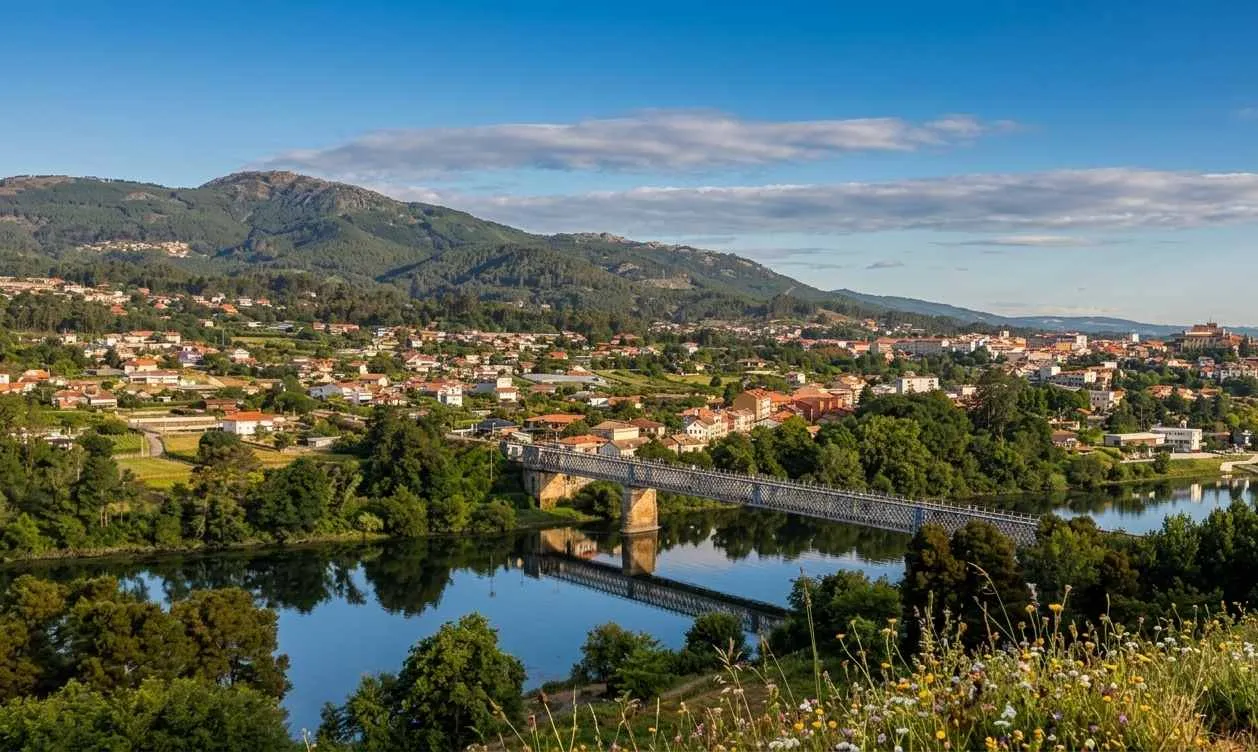
The first cycling day follows the Minho River, one of the most important natural borders in Portugal.
The riding is:
- Mostly flat
- Relaxed and scenic
- Ideal to settle into the rhythm
Key highlights along the way:
- Vineyards producing Alvarinho wine, one of Portugal’s most renowned white wines
- Monção, known for viticulture and deep historical roots
- Small villages shaped by agriculture and river life
Arriving in Valença:
- You reach a fortified town overlooking Spain
- The massive walls reflect centuries of border defence
This day defines what Minho cycling is about: rivers, vineyards, and slow-paced exploration.
Day 3: Valença to Viana do Castelo – From River to Coast (60 km)
This is one of the most dynamic days.
You continue along the Minho River toward:
- Caminha, where the river meets the Atlantic
- Historic defensive structures like the Ínsua Fort
Then everything changes:
- The river gives way to the ocean
- The landscape opens dramatically
Midway stop:
- Vila Nova de Cerveira, known as the “Village of the Arts”
Final destination: Viana do Castelo:
- A historic maritime city
- Deep connection to Portugal’s Discoveries
- Strong fishing culture and traditions
This transition, from inland river to coastline, is one of the highlights of the entire trip.
Day 4: Viana do Castelo to Ponte de Lima – Back Inland Along the Lima River (25 km)
After the coast, the route turns inland again.
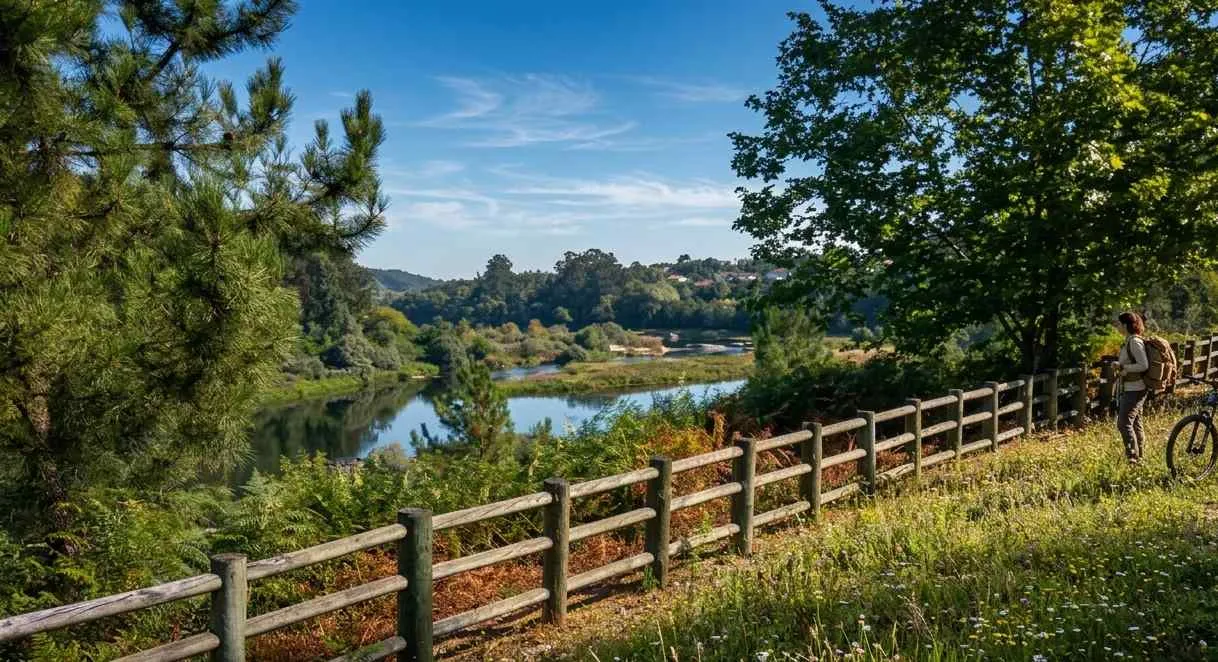
You follow the Lima River, entering a quieter and more rural environment.
Ponte de Lima is one of the most iconic towns in Northern Portugal:
- The oldest village in Portugal (chartered in 1125)
- Famous Roman and medieval bridge
- Key passage point for Santiago pilgrims
The cycling here is:
- Shorter distance
- Slower pace
- More culturally focused
This day feels different: more historical, more intimate, less about distance.
Day 5: Ponte de Lima to Esposende – From Rivers to Atlantic Landscapes (50 km)
This stage reconnects you with the Atlantic.
You start along the Lima River, then move toward the coast:
- Passing farmland, forests, and small villages
- Gradually opening to wide coastal views
As you approach Esposende:
- The scenery becomes more varied
- Pine forests, dunes, and rivers merge with the ocean
Highlights include:
- Neiva River
- Ofir pine forests
- Coastal viewpoints
This is one of the most scenic and balanced days of the trip.
Day 6: Esposende to Porto – The Final Coastal Ride (65 km)
The last day follows the Atlantic south toward Porto.
This is a classic coastal ride:
- Flat and continuous
- Passing through traditional fishing villages
Key stops:
- Póvoa de Varzim, where fishing traditions are still active
- Vila do Conde, with strong maritime history
As you approach Porto:
- The scenery shifts again
- From small towns → to a vibrant city
Arriving in Porto marks the end of a journey that connects: mountains → rivers → coast → city.
What Makes This North Portugal Cycling Route Unique
1. A Complete Journey Through the Region
This itinerary is structured to show the full diversity of Northern Portugal:
- Upper Minho (Melgaço)
- River cycling (Minho & Lima)
- Atlantic coast
- Porto urban finish
2. Beginner-Friendly Yet Rich in Experience
The route is mostly:
- Flat or gently rolling
- Based on cycle paths and low-traffic roads
This makes it ideal for:
- First-time cycling holidays
- Leisure riders
- E-bike users
3. Strong Cultural Identity
Unlike other regions, Minho combines:
- Border culture (Portugal–Spain)
- Medieval towns and fortresses
- Deep-rooted traditions
4. Gastronomy as Part of the Ride
Food is not just a bonus, it’s part of the experience:
- Alvarinho wines
- Fresh seafood on the coast
- Traditional dishes like sarrabulho and codfish
FAQ
Is this route suitable for beginners?
Yes. The route is mostly flat with manageable distances, making it accessible for most cyclists.
What is the highlight of this cycling holiday?
The diversity, cycling from inland river valleys to the Atlantic coast, finishing in Porto.
Do I need a high fitness level?
No. The itinerary is designed for a relaxed pace, especially with e-bike options.
When is the best time to cycle this route?
Spring and early autumn offer the best weather and landscape conditions.
Final Thoughts
This cycling holiday is not just about covering distance, it’s about progression.
Each day builds on the last:
- River → Coast → River → Coast → City
By the time you arrive in Porto, you’ve experienced the North of Portugal in a way that few trips allow.