Cycling Alentejo - The Complete Bike Tour Guide to Portugal’s Wine Country & Castles
Written by Sérgio Marques, Founder & Route Designer, Top Bike Tours Portugal
June 5, 2026
991 words
5 minutes
Cycling in Alentejo offers a completely different experience from the rest of Portugal. If you’re still exploring options across the country, you might want to start with our guide to the best bike tours in Portugal. In this region, wide open landscapes, quiet rural roads, historic villages, and a deep connection to wine and gastronomy come together to create one of the most authentic bike touring experiences in Europe.
While many cyclists are drawn to coastal routes or mountain terrain, Alentejo stands out for its simplicity: long horizons, peaceful riding, and a slower rhythm that allows you to truly experience the country.
This guide brings together everything you need to know before planning a bike tour in Alentejo, from routes and terrain to accommodation, food, and what to expect day by day.
Why Choose Alentejo for a Bike Tour?
Alentejo is often overlooked, but for many cyclists, it becomes a highlight of their trip to Portugal. To better understand the full experience, including daily rhythm, routes, and logistics, you can read more about what to expect on an Alentejo bike tour.
What makes the region special:
- Quiet, low-traffic roads
- Large open landscapes and rolling terrain
- Historic villages and medieval castles
- Strong food and wine culture
- Authentic rural atmosphere
Compared to other regions in Portugal, Alentejo is less about dramatic climbs or coastal scenery and more about immersion and tranquility.
What Is Cycling Like in Alentejo?
The riding experience in Alentejo is defined by consistency and openness.
Terrain and riding conditions
- Mostly rolling terrain with gentle elevation changes
- Occasional short climbs when approaching hilltop villages
- Smooth secondary roads with minimal traffic
- Long distances between towns, especially around Alqueva Lake
This makes it ideal for:
- Riders looking for moderate difficulty
- E-bike travellers
- Cyclists who enjoy steady, uninterrupted riding
Best Areas to Cycle in Alentejo
Alentejo is a large region, but a few areas stand out for multi-day bike tours.
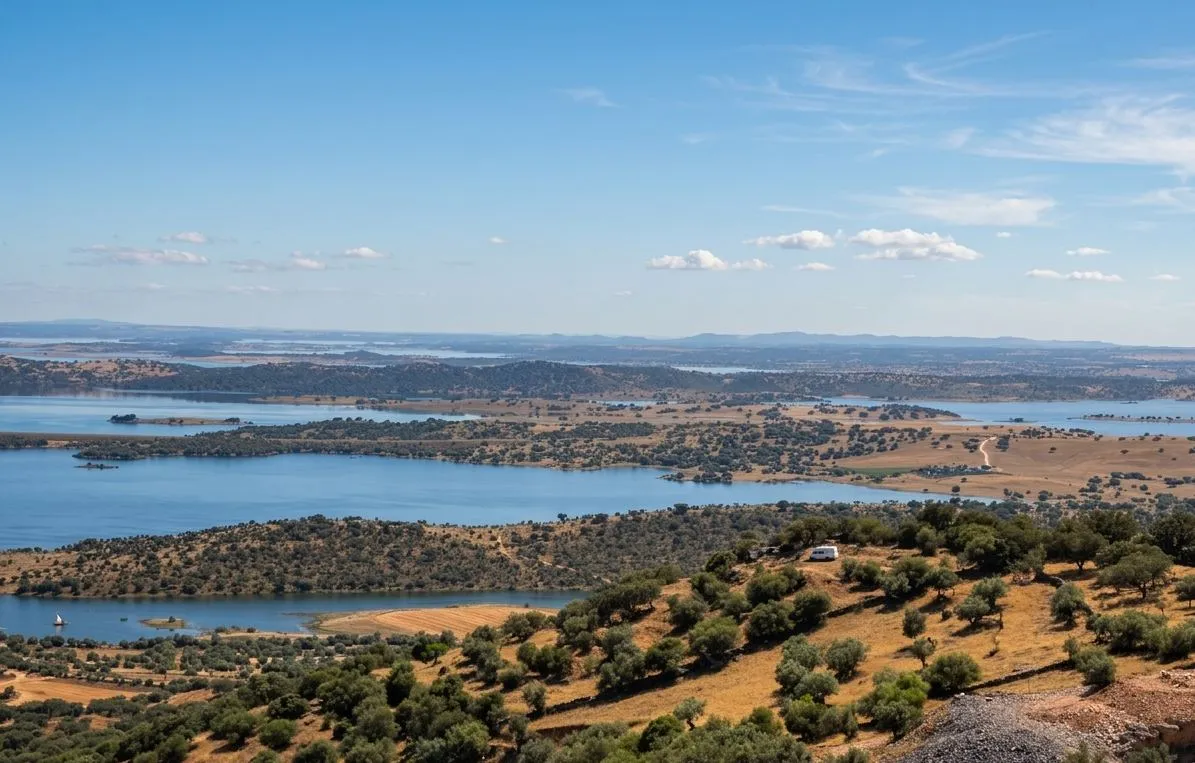
Monsaraz & Alqueva Lake
This is one of the most scenic cycling areas in southern Portugal.
- Vast lake views
- Quiet, empty roads
- Historic hilltop village of Monsaraz
- One of the darkest sky reserves in Europe
Évora & Central Alentejo
A more cultural-focused region, ideal for combining cycling with history.
- UNESCO World Heritage city
- Roman and medieval heritage
- Easy to moderate routes through rural landscapes
Wine Country & Castles Routes
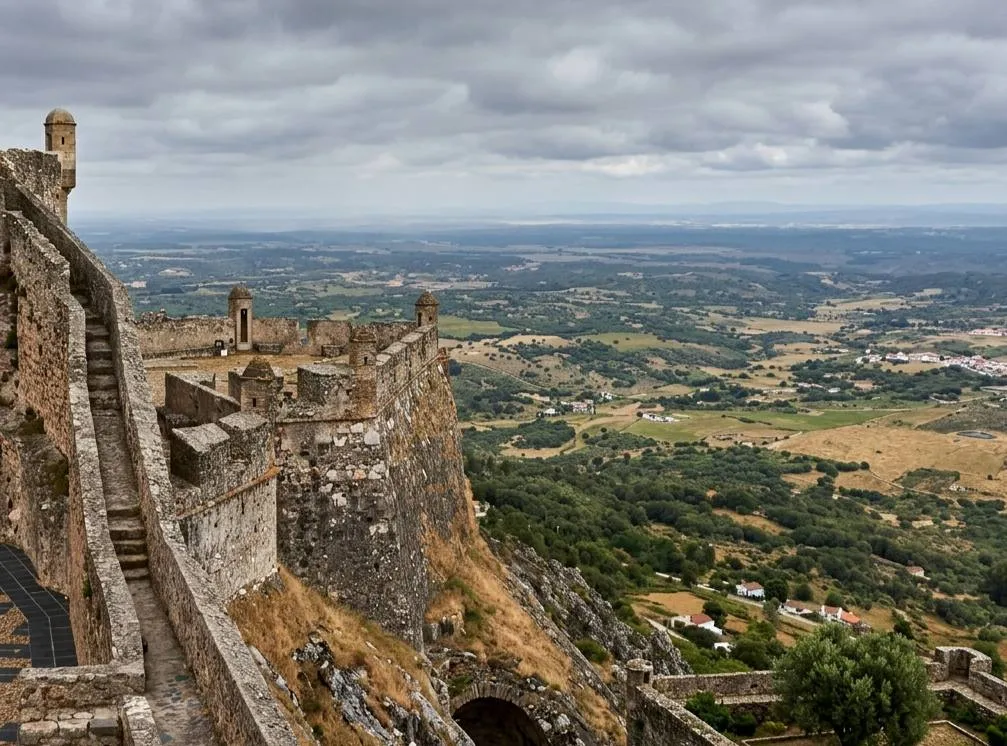
Many cycling routes connect traditional estates, vineyards, and fortified towns.
- Rural charm and local character
- Historic stops throughout the route
- Strong connection to regional wine production
What to Expect on an Alentejo Bike Tour
A multi-day bike tour is the best way to experience Alentejo fully.
Routes are typically designed to balance cycling, cultural stops, and local experiences. If you want a deeper understanding of what the journey feels like day-to-day, this guide onwhat to expect on an Alentejo bike tour gives a helpful overview.
If you want a structured experience, you can explore examples of Alentejo bike tours:
These types of tours usually include:
- Carefully planned daily routes
- Accommodation in rural hotels and estates
- Luggage transfers
- Navigation support (GPX or roadbook)
The overall pace is relaxed, allowing time to enjoy stops along the way.
Where You Stay in Alentejo
Accommodation is a key part of the experience.
Unlike urban destinations, most stays focus on regional character and atmosphere rather than large hotels. To see exactly how this looks along a full itinerary, explore this detailed guide on where you stay on an Alentejo bike tour.
Typical options include:
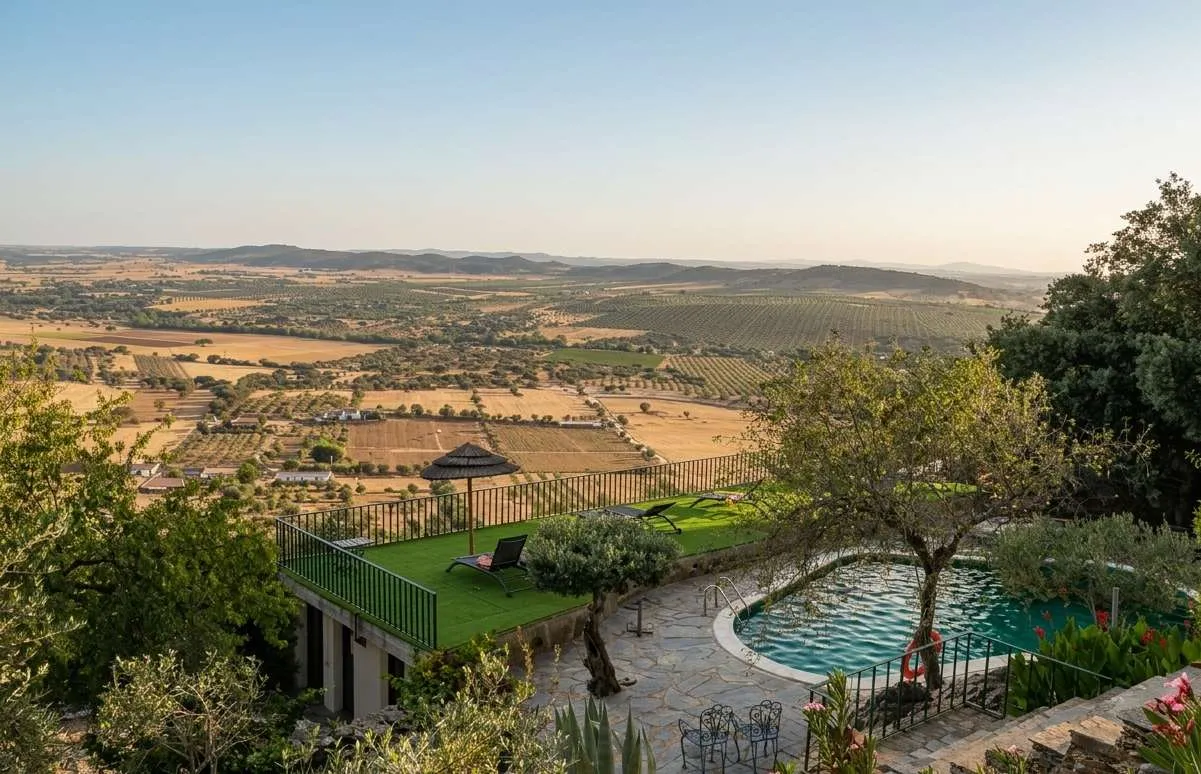
- Traditional herdades (rural estates)
- Boutique guesthouses
- Wine estates with local production
Many places offer:
- Homemade meals
- Wine tastings
- Quiet surroundings in nature
Food & Wine Along the Ride
Alentejo is known for having one of the richest culinary traditions in Portugal.
Cycling here naturally includes a strong food component.
Expect:
- Simple but flavorful dishes based on bread, olive oil, garlic, and herbs
- Regional specialties like pork, lamb, and traditional soups
- Excellent local wines directly from small producers
Meals tend to be unhurried and are often a highlight of the day.
Best Time to Cycle in Alentejo
Thanks to its southern location, Alentejo has a long cycling season. If you want a detailed breakdown of weather, temperatures, and the best months to visit, take a look at this guide on the best time to cycle in Alentejo.
Spring (March – May)
- Green landscapes
- Mild temperatures
- Ideal for cycling
Autumn (September – November)
- Harvest season
- Warm days, cooler mornings
- Great food and wine atmosphere
Summer (June – August)
- Hot temperatures
- Best to ride early in the day
Winter (December – February)
- Mild climate
- Very quiet and peaceful
Who Is This Region Best For?
Alentejo is ideal if you are looking for:
- A relaxed and immersive cycling experience
- Cultural and gastronomic travel
- Moderate-level routes without extreme climbs
- Quiet landscapes and low traffic
It may not be the best choice if you prefer:
- Coastal riding
- Mountain challenges
- Fast-paced cycling trips
How Alentejo Compares to Other Regions
If you are deciding where to cycle in Portugal, it helps to understand how Alentejo compares.
- Douro Valley - more challenging, steeper terrain
- Algarve - coastal, milder winter weather
- Porto to Lisbon - long-distance coastal riding
But you can explore our others bike tours in Portugal.
Practical Tips for Cycling in Alentejo
- Always carry enough water
- Expect long, open stretches without shade
- Start early in warmer months
- Plan stops in small villages
- Consider an e-bike for longer distances
Final Thoughts: Cycling Alentejo
Alentejo is not about speed or performance, it’s about experience.
It’s a region where cycling becomes a way to slow down, connect with the landscape, and discover a quieter side of Portugal.
For riders who value authenticity, space, and simplicity, it remains one of the most rewarding places to explore on two wheels.