What to Expect on an Alentejo Bike Tour: A Day‑by‑Day Experience
Written by Sérgio Marques, Founder & Route Designer, Top Bike Tours Portugal
June 5, 2026
896 words
4 minutes
One of the most useful ways to understand what cycling in Alentejo is really like is to look at how the journey unfolds day by day.
Unlike coastal routes, where the landscape changes frequently, Alentejo offers a more gradual experience. The scenery evolves slowly, and each day builds on the previous one, creating a continuous and immersive journey through the region.
If you are still deciding between regions, you can also compare this experience within the broader best bike tours in Portugal.
Day 1: Arrival & Transfer to Marvão
The journey begins with a transfer from Lisbon into the north of Alentejo.
The shift is immediate, from an urban environment to a quiet, remote landscape dominated by open views and rolling hills.
Once in Marvão:
- You arrive in one of Portugal’s most scenic hilltop villages
- The 9th-century castle overlooks vast plains stretching into Spain
- Narrow streets and stone houses create a strong sense of place
If time allows, there are optional visits nearby:
- Roman ruins of Ammaia
- A peaceful river area near Portagem
This first day is not about cycling yet, it’s about slowing down and stepping into a very different rhythm.
Day 2: Marvão → Crato / Alter do Chão
The first ride begins directly from Marvão’s elevated setting.
The day combines:
- Quiet secondary roads
- Rolling terrain
- Historic villages along the way
Key highlights:
- Castelo de Vide, one of the most charming towns in the region
- Flor da Rosa, with its historic monastery setting
The riding itself is smooth and consistent rather than demanding.
You’ll notice early on what defines cycling in Alentejo:
- Minimal traffic
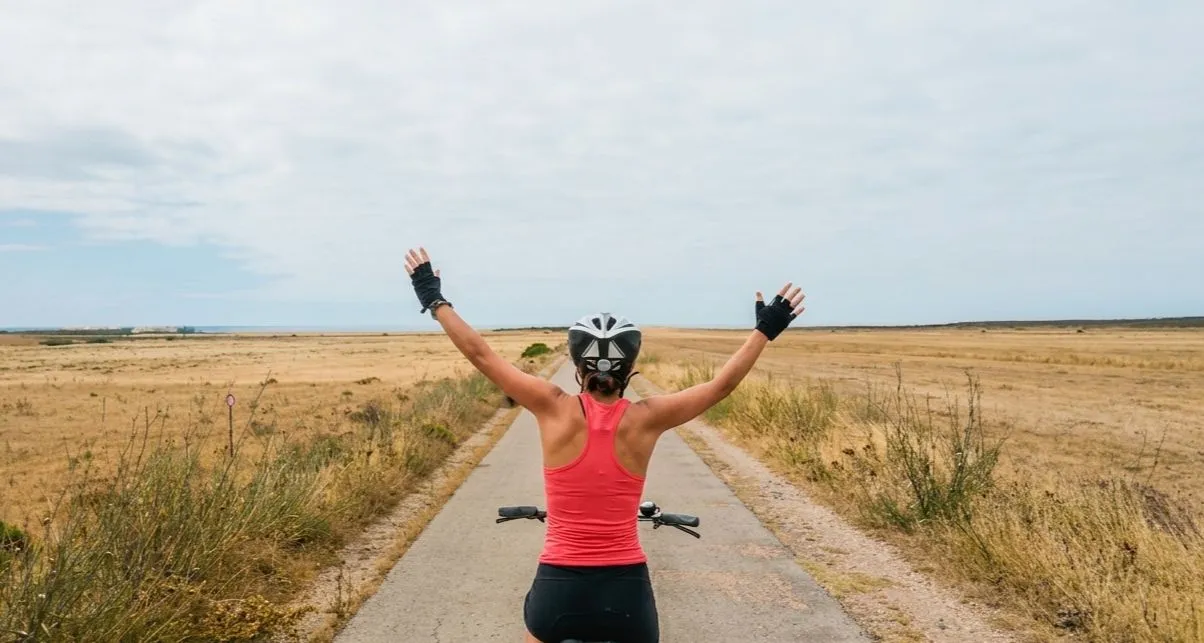
- Large, open landscapes
- A steady pace without interruptions
The day ends in Crato or Alter do Chão, surrounded by countryside.
Day 3: Crato / Alter do Chão → Monforte
This stage moves deeper into the interior.
The route passes through:
- Alter do Chão, known for its Lusitano horses
- Fronteira, a quiet and traditional village
The feeling of space increases on this day:
- Longer distances between towns
- Wider horizons
- A stronger sense of isolation
Compared with more structured routes in Portugal, this is where Alentejo becomes clearly distinct — the cycling feels uninterrupted and calm.
You finish in Monforte, in a very peaceful rural setting.
Day 4: Monforte → Estremoz
The landscape begins to change slightly, becoming more agricultural.
Throughout the ride, you pass:
- Farmland and open fields
- Small villages like Cabeço de Vide
- Areas known for thermal waters and local life
As you approach Estremoz:
- The scenery becomes more defined
- White marble appears in buildings and streets
Estremoz itself offers:
- A historic center
- A castle overlooking the town
- A more active local atmosphere compared to previous stops
This creates a subtle transition from pure countryside into a historic town environment.
Day 5: Estremoz → Monsaraz
This is one of the longest and most varied days of the tour.
The route combines several distinct elements:
- Marble landscapes near Estremoz
- The wine regions around Borba
- The historic town of Vila Viçosa
Key moments:
- Passing through one of Portugal’s main marble production areas
- Visiting Vila Viçosa, strongly linked to royal history
- Gradual terrain changes throughout the day
Towards the end of the ride:
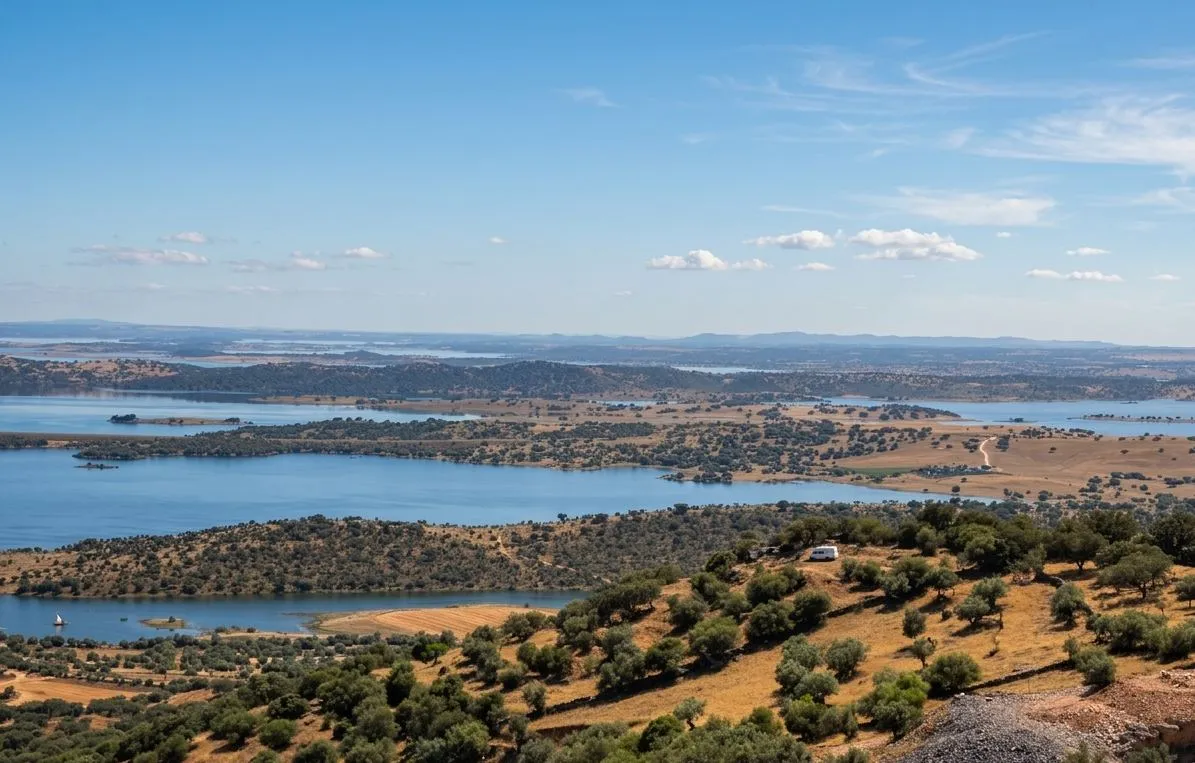
- A long descent leads toward Alqueva Lake
- Vegetation becomes more Mediterranean
- The landscape opens even further
Before reaching Monsaraz, the route passes near prehistoric sites such as the Outeiro Menhir.
Arrival in Monsaraz is one of the highlights of the entire tour, with views over the lake and surrounding plains.
Day 6: Monsaraz → Évora
This stage connects rural Alentejo with one of its most important cities.
The route includes:
- Vineyards around Reguengos
- Passing near Herdade do Esporão
- Quiet roads through villages like Montoito
The riding experience:
- Long, steady sections
- Minimal traffic
- Very consistent terrain
As you approach Évora:
- The landscape gradually becomes more structured
- Signs of historical density increase
Arrival in Évora offers a noticeable contrast:
- A UNESCO-listed historic center
- Roman and medieval monuments
- A more urban but still relaxed atmosphere
Day 7: Évora Loop → Arraiolos → Évora
This is a circular ride that combines cycling with cultural exploration.
Highlights include:
- Arraiolos village, known for its traditional carpets
- The unique circular castle
- Vineyards, olive trees, and cork oak landscapes
The ride itself is balanced:
- Moderate distance
- Rolling terrain
- A relaxed pace
Back in Évora, there is time to explore further:
- The Cathedral
- The Roman Temple
- The Chapel of Bones
This day adds a strong cultural dimension to the overall experience.
Day 8: Departure or Optional Extra Ride
The tour officially ends here, but many itineraries include an optional final ride.
This additional loop may include:
- Prehistoric sites such as dolmens and cromlechs
- Roman ruins like the village of Tourega
- Quiet roads around Évora
It’s a softer, optional ending, more about exploration than distance.
What Defines the Day‑by‑Day Experience?
Across all stages, a few patterns repeat consistently:
- Quiet roads with very low traffic
- Gradual transitions between landscapes
- A steady rhythm rather than physically demanding riding
- Strong integration of cultural and historical stops
Unlike faster or more varied routes, Alentejo is about continuity. Each day flows naturally into the next.
Final Thoughts: The Pace of an Alentejo Bike Tour
Cycling in Alentejo is not about intensity or performance.
It’s about: Space, silence and progression through a landscape that reveals itself slowly
From the hilltop start in Marvão to the historic depth of Évora, the journey feels connected and intentional, offering not just a route, but a complete regional experience on two wheels. For a deeper understanding of what makes this region so unique, explore our complete guide to cycling in Alentejo.