Exploring the Scenic Route: Porto to Santiago de Compostela
Written by Sérgio Marques, Founder & Route Designer, Top Bike Tours Portugal
December 17, 2025
1129 words
6 minutes
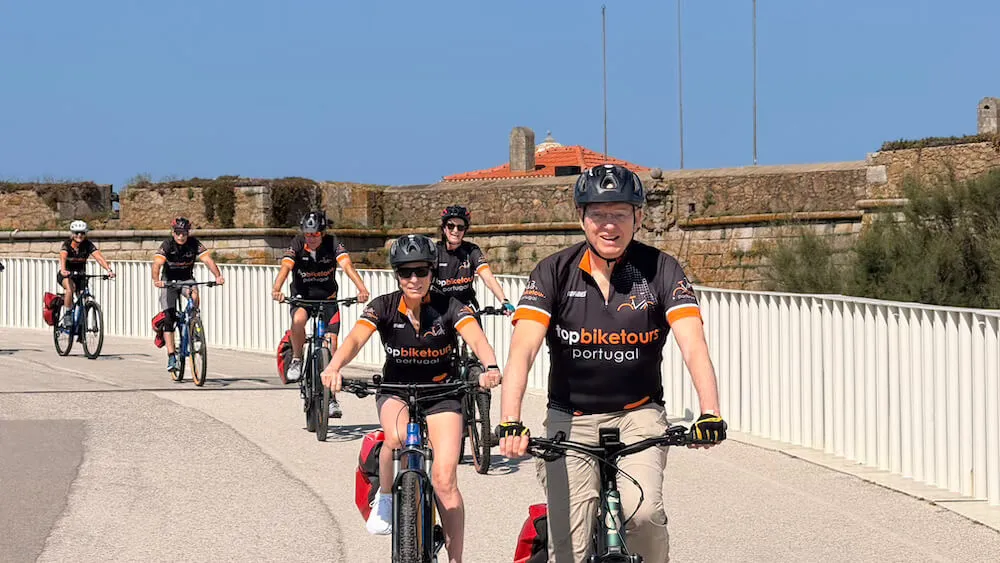
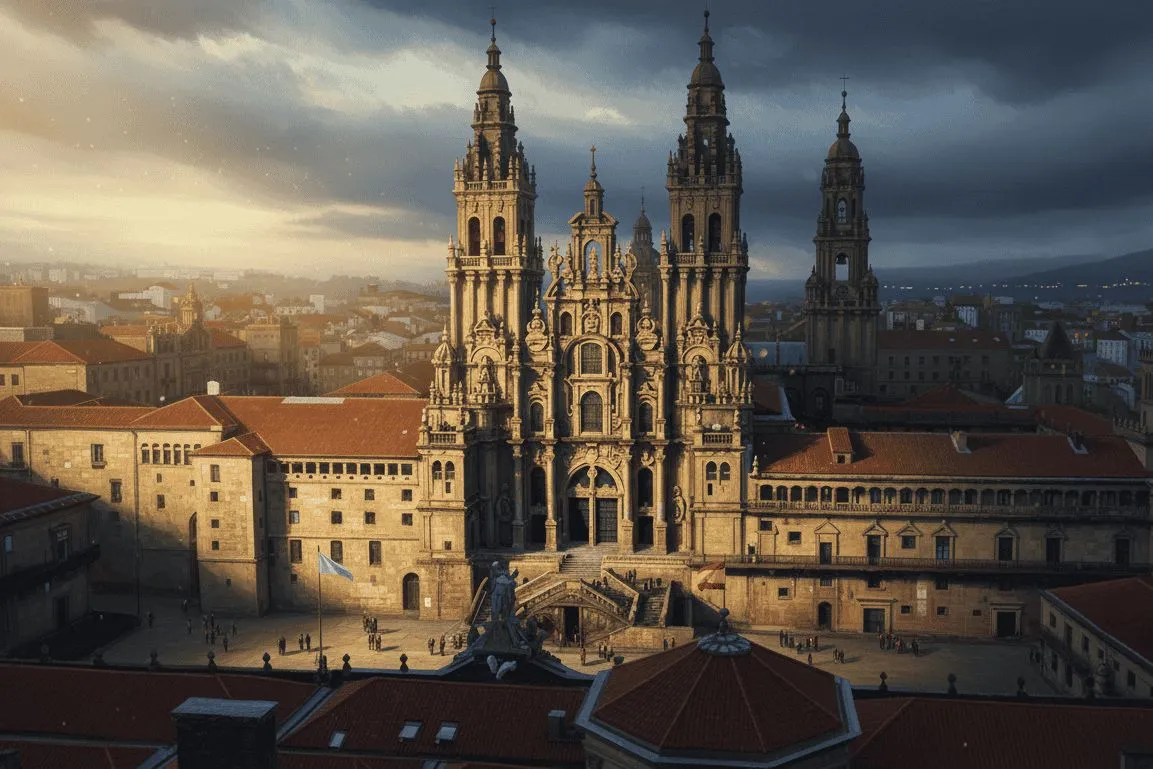
Embarking on the journey from Porto to Santiago de Compostela with Top Bike Tours Portugal is more than a cycling trip — it is an immersion into history, culture, and some of the most beautiful landscapes in Portugal and northern Spain. This route, known as the Portuguese Camino, blends Atlantic coastline, medieval towns, and centuries-old pilgrimage traditions into a journey that feels both timeless and deeply personal.
What Is the Portuguese Camino?
The Portuguese Camino from Porto to Santiago de Compostela stretches roughly 240 kilometres and can be followed via inland or coastal routes. Walkers typically take between 10 and 14 days to complete the journey, while cyclists usually cover the distance in 5 to 7 days. Spring and autumn offer the most comfortable conditions, with mild temperatures, long daylight hours, and a lively but uncrowded pilgrim atmosphere.
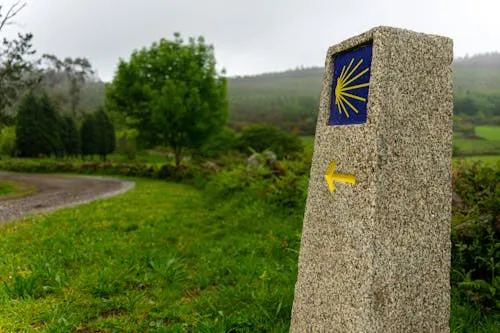
Marked by yellow arrows and the iconic scallop shell, the route leads pilgrims through historic cities, rural landscapes, and vibrant coastal towns. Accommodation options range from simple albergues to boutique hotels, making the Camino accessible to a wide range of travellers.
Pilgrims who complete the route are eligible to receive the Compostela, the official certificate issued in Santiago de Compostela — both a symbolic and emotional milestone that marks the end of the journey.
The Origins of the Camino Português
The Camino Português is an ancient pilgrimage route dating back to the Middle Ages. Traditionally beginning in Lisbon and passing through Porto, it forms part of the wider Camino de Santiago network that spans much of Europe.
For many pilgrims, Porto has become the preferred starting point. The city combines excellent transport links, rich architecture, and a welcoming atmosphere — offering a modern gateway into an otherwise historic journey. From here, the path unfolds through vineyards, river valleys, fishing villages, and, eventually, Galicia’s green landscapes.
Inland or Coastal: Two Ways to Santiago
One of the defining features of the Portuguese Camino is the choice between two main routes:
The Inland Route
This traditional path passes through towns such as Barcelos and Ponte de Lima, known for Roman bridges, medieval architecture, and strong pilgrim traditions. We ride it as the Camino Português Central Way, 243 km over eight days. It tends to be more physically demanding, with rolling terrain and longer inland sections, but rewards cyclists with cultural depth and a quieter, reflective atmosphere.
The Coastal Route
Following the Atlantic shoreline, the coastal Camino is celebrated for its ocean views, boardwalks, and relaxed riding conditions. Cyclists pass through seaside towns, estuaries, and fishing villages, often riding alongside the sea. This section is particularly popular with those who enjoy open landscapes and gentler terrain during the early stages of the journey.
Both routes eventually merge in Galicia before continuing to Santiago de Compostela.
Why the Journey from Porto to Santiago Matters
The route from Porto to Santiago de Compostela holds profound cultural, historical, and spiritual significance. For centuries, it has been travelled by pilgrims seeking faith, reflection, and renewal. Today, it continues to attract people from around the world — not only for spiritual reasons, but for cultural discovery, personal challenge, and the joy of slow travel.
Cycling this journey offers a unique way to experience both Portugal and Spain. The transition from Porto’s vibrant riverside atmosphere to Galicia’s green hills and stone villages highlights the distinct identities of each region, while the shared Camino culture connects them.
Just as importantly, the Camino plays a vital role in sustaining local communities. Cafés, guesthouses, artisans, and small businesses thrive thanks to the steady flow of pilgrims, helping preserve traditions and rural life along the route.
While this journey is often described as one of the most scenic Caminos, its appeal also comes from how accessible the route is for recreational riders. Distances are manageable, infrastructure is good, and accommodation is well distributed. A more detailed overview of cycling the Portuguese Camino from Porto to Santiago helps explain how the route is organised and why it works so well for cyclists.
Planning Your Journey
Good planning enhances the Camino experience. Before setting off, travellers should consider their preferred route (inland or coastal), expected daily distances, fitness level, and time of year.
Best Time to Bike the Camino
- Spring (April–June): Fresh landscapes, mild weather, fewer crowds
- Autumn (September–October): Cooler days, harvest season, beautiful light
- Summer: Possible, but heat and high pilgrim numbers can make cycling more demanding
How Long Does It Take by Bike?
Most cyclists complete the route in 5 to 7 days, averaging about 50 kilometres per day. The coastal route may encourage a slower pace due to scenery and additional seaside sections, while the inland route tends to be more direct.
Transport Options Along the Way
While cycling is the primary way to experience the Camino, public transport offers flexibility. Trains and buses connect many towns along the route and provide convenient options for rest days, alternative stages, or return travel after reaching Santiago.
The Route in Detail
Key Stages from Porto to Santiago
Common stages along the coastal variant include:
- Porto → Vila do Conde
- Vila do Conde → Esposende
- Esposende → Viana do Castelo
- Viana do Castelo → Caminha
- Crossing into Galicia via ferry
- Baiona → Pontevedra → Santiago de Compostela
Each stage has its own character, offering a blend of natural beauty, historic centres, and warm pilgrim hospitality.
The Coastal Scenery
The Portuguese Camino’s coastal section is one of its most celebrated features. Riders follow sandy beaches, wooden boardwalks, and clifftop paths, often accompanied by the sound of the Atlantic. Sunrises near Vila do Conde, coastal ridges near Caminha, and medieval fortresses overlooking the sea in Baiona are among the highlights.
Photography lovers will find endless inspiration — from sweeping seascapes to intimate village scenes.
Life on the Camino
Beyond landscapes and distances, the Camino is shaped by people. Shared meals, spontaneous conversations, and evenings in small towns create a strong sense of community. Even brief encounters often leave a lasting impression, adding emotional depth to the journey.
Local cuisine becomes part of the experience: fresh seafood, caldo verde, regional wines, and simple, hearty meals shared with fellow pilgrims.
Reflecting on the Camino Experience
Reaching Santiago de Compostela is not an end, but a transition. For many, the Camino leaves behind a quieter mind, renewed perspective, and a deeper appreciation for simplicity and human connection.
The experience of cycling day after day creates space for reflection, resilience, and discovery — both outward and inward.
Ready to Take the Next Step?
For those inspired by the journey but who prefer to focus entirely on the experience rather than logistics, our Porto to Santiago de Compostela Bike Tour follows the Portuguese Coastal Camino with thoughtfully planned stages, accommodation, and luggage transfers.
Many travellers choose to cycle from Porto to Santiago with full support, allowing them to enjoy the scenery, culture, and meaning of the Camino while every practical detail is taken care of.